
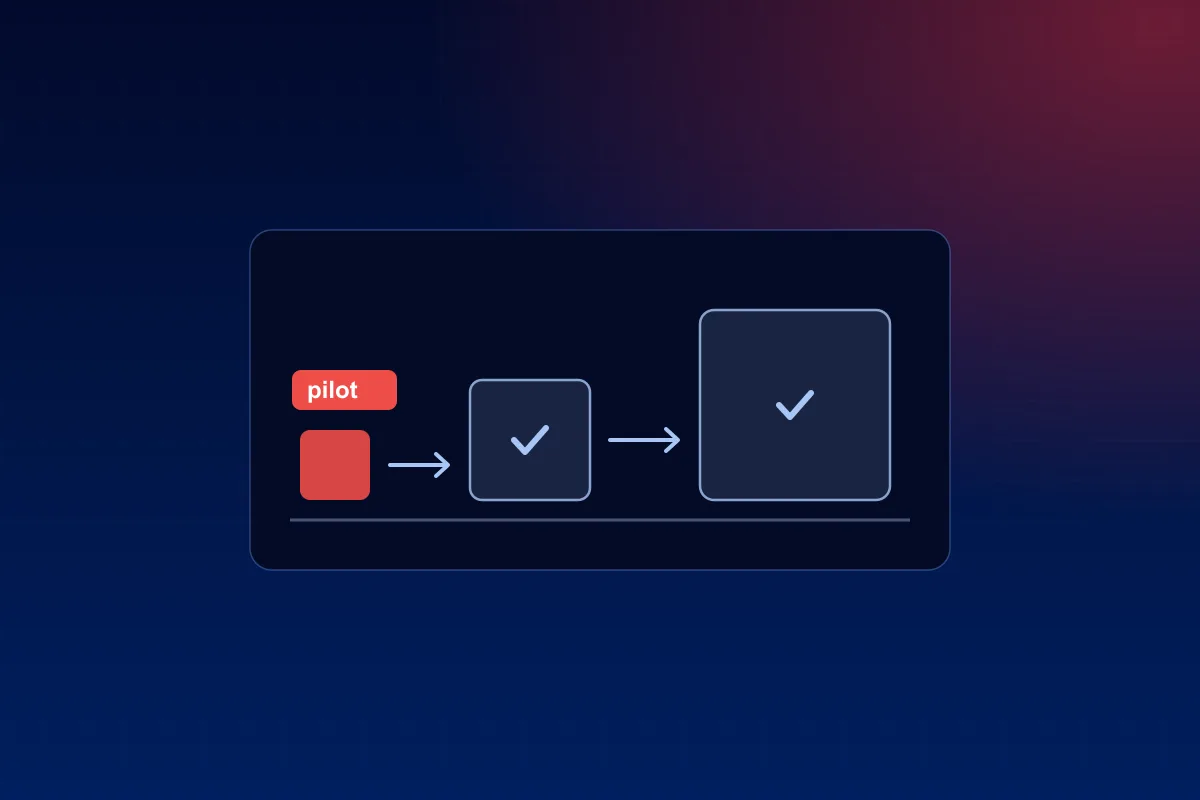
In short: a pilot is a small batch labeled before the full project. It answers three questions: does the guideline work, what accuracy can be reached, and how fast. Run it on real data, measure it against labels you trust, and fix the guideline before the volume starts.
What a pilot is for
- The guideline. Real items raise questions no document foresaw. Better to find them in a few hundred items than in a hundred thousand.
- The quality. You see the accuracy on your own data, not on a brochure.
- The pace. The time each item really takes turns an estimate into a figure you can plan with.
- The working relationship. How questions are asked, how fast they are answered, how changes are handled.
It is not a contest for the fastest delivery. A team that asks good questions during a pilot is doing it right.
Six steps
- Pick a sample that looks like the real data. Include every class, the usual cases, and the hard ones on purpose: poor light, hidden objects, unclear wording.
- Write the first guideline. Classes, definitions, examples, and what to do when unsure. It will change; that is the point.
- Label a reference set yourself. Have your own experts label part of the sample and agree the answers. This is what the results are measured against.
- Run the batch and keep the questions. Every question from the annotators goes into one list, with its answer. That list becomes the next version of the guideline.
- Measure. Accuracy against the reference set, class by class. Agreement between annotators. Time per item. The number and kind of questions. Our guide explains how to measure data annotation quality.
- Revise and decide. Update the guideline, then choose: go on, run a second small batch with the new rules, or stop.
What a good result looks like
- Accuracy meets the target on the common classes, and you know why it misses on the others.
- The disagreements come down to a short list of rules that can be written down.
- The pace is steady enough to plan a timeline.
- Questions were asked early instead of guessed.
A pilot that finds ten gaps in the guideline has succeeded. A pilot that finds none was probably too easy.
Common mistakes
- A sample that is too clean. The project will not be.
- No reference set. Without agreed answers, a result is only an opinion.
- Judging speed alone. Fast wrong labels cost more than slow right ones.
- Changing the rules without writing them down. The next batch then repeats the old errors.
After the pilot
Grow in steps, not in one jump: a larger batch, then production. Keep checking a random sample of every delivery, because quality can drift when volume rises. Use what the pilot measured to settle the quote: see how data annotation projects are quoted.
Starting a pilot with Pripton
A small batch is the quickest way to agree a guideline. Tell us the data type, the labels and the format you need through the contact page. We label images, video, text, audio and LiDAR data: the full list is on the services page.
If you are still deciding whether to hand the work to a vendor at all, read in-house or outsourced data annotation.


